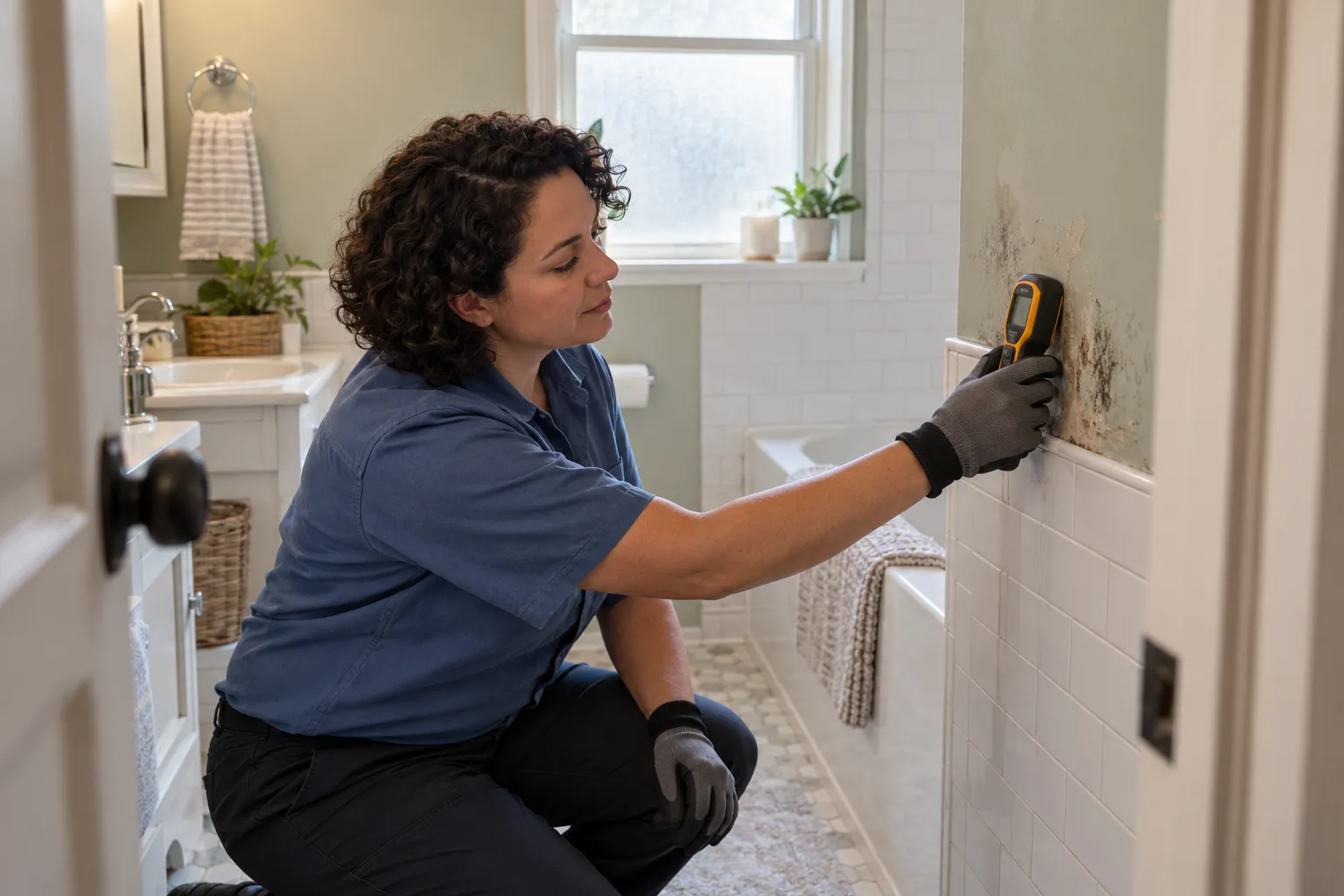
Straight answers to common questions
Mold Frequently Asked Questions
Call Now With Your Question
What should I do first if I find mold?
Leave it alone for now. Scrubbing, sanding or dry-brushing mold can spread spores to other areas. Close off the room if you can, and look for the moisture source, such as a leak, condensation or high humidity. Take photos for your records. Then call a mold provider to inspect the area. If you have health concerns, talk to a doctor.
How do I know if I have hidden mold?
A musty, earthy smell is often the first sign. Other clues include stains on walls or ceilings, bubbling paint, warped baseboards and a history of leaks. Mold can grow behind drywall, under flooring, inside cabinets and in attics or crawl spaces. A provider can use moisture meters, thermal cameras and testing to find growth you can't see.
Do I need mold testing or just removal?
It depends on your situation. If mold is visible and the cause is clear, many providers go straight to a remediation plan. Testing is more useful when you smell mold but can't find it, when you're buying or selling a home, or after remediation to check that the work area is clean.
How much does mold remediation cost?
Costs vary widely by job. Across the U.S., small jobs often cost a few hundred dollars to around $1,500, while larger jobs in attics, basements or several rooms can reach several thousand dollars or more. The size of the area, where the mold is and how much material must be removed all affect the price. Always ask for a written quote before work begins.
Can I clean mold myself with bleach?
Bleach can lighten stains on hard surfaces like tile, but it often doesn't reach mold inside porous materials such as drywall and wood. Many guidelines suggest professional help when the affected area is larger than about 10 square feet, when mold is inside walls or HVAC systems, or when it keeps coming back. Never mix bleach with ammonia or other cleaners.
Does homeowners insurance cover mold removal?
It depends on your policy and what caused the mold. Some policies may cover mold that results from a sudden, covered water event, like a burst pipe. Mold from long-term leaks, humidity or poor maintenance is often excluded or capped. Check your policy or call your insurer. Providers can often help document the damage for your claim.
Is mold a health risk?
We can't give medical advice, and this website does not make health claims. If you or anyone in your home has health concerns related to mold, talk to a doctor. A mold provider can tell you about the condition of your home, but not about your health.
How does Edinburghsleep Mold Help work?
Edinburghsleep Mold Help is a referral service. When you call or request an estimate, we connect you with an independent mold provider that serves your area. That provider inspects your home, gives you a written estimate and, if you choose, does the work. We do not perform inspection, testing or remediation ourselves, and you are never obligated to hire the provider we connect you with.
Contact Us
Get in touch
Seeing or smelling mold? Call Edinburghsleep Mold Help to check provider availability near you and talk through what to do next.